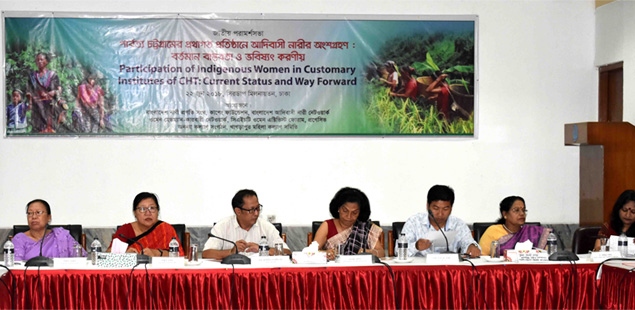
“The government is pledge-bound to empower women and remove all kinds of discrimination against them. We will repeal the laws which are responsible for creating any bar to establishing gender equality,” says Barrister Shafique Ahmed, the minister for Law, Justice and Parliamentary Affairs of the Bangladesh government.

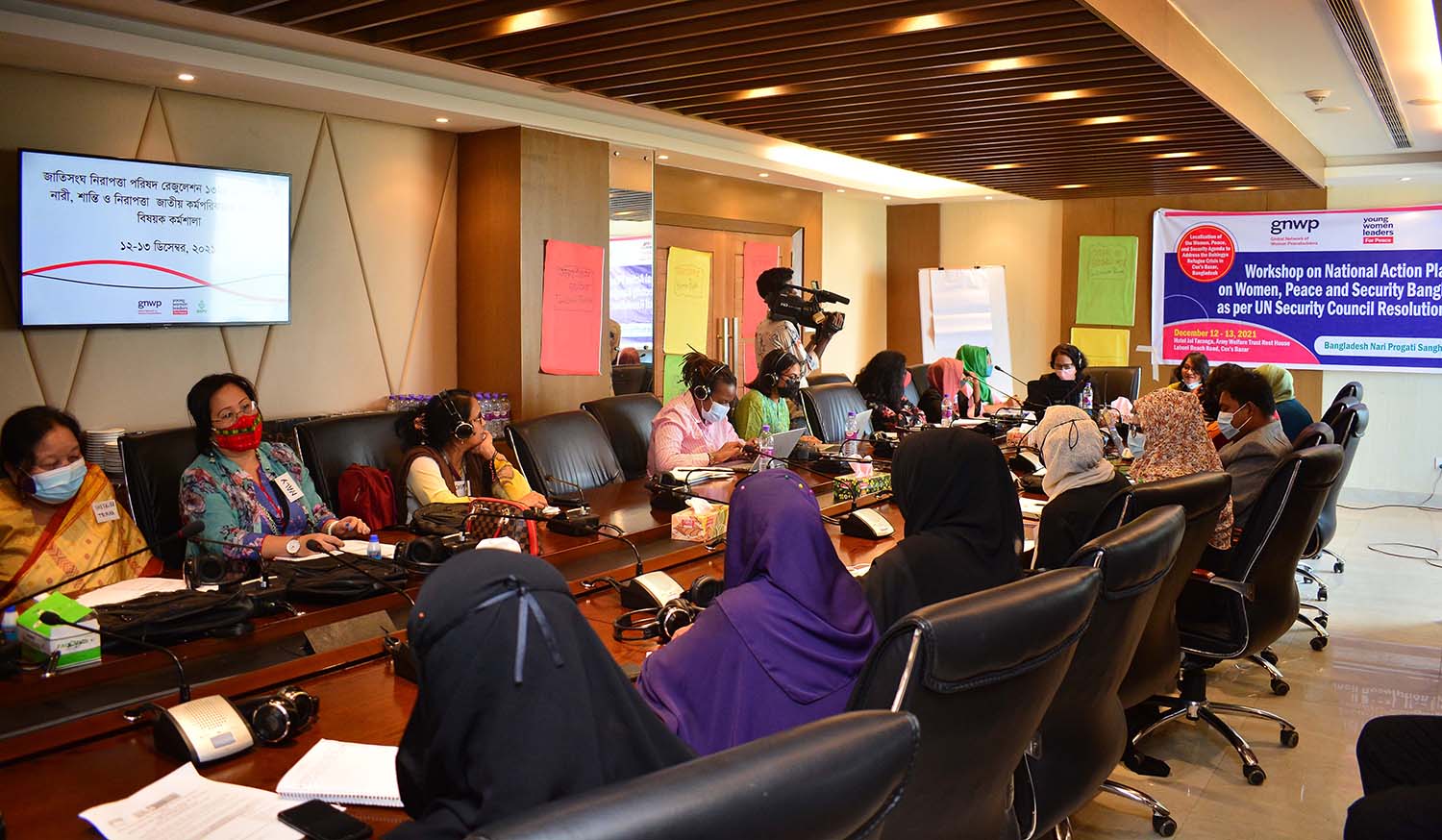
The minister made such speech in a national seminar on “Status of Implementation of National Polices and other Commitments Related to Women in Bangladesh” organized by BNPS on 20 June 2009 in Dhaka. Professor Salahuddin M. Aminuzzaman of the University of Dhaka shared the research findings on the above issue. The research argued that although significant constitutional provisions and statutory laws have guaranteed women’s equal rights, but because of some discriminatory personal laws, political culture, lack of commitment, the patriarchal socio-economic system and traditional mindset, Bangladesh could not proceed to the expected direction and keep the pace to achieve gender equality. Professor Momtaj Begum, Chairperson of Jatiyo Mohila Sangstha attended the seminar as special guest while Dr. Shirin S. Chaudhury, Member of the Parliament, Mr. Shyamal Dutta, Editor, Daily Bhorer Kagoj, Mr. A H M Abul Kashem, former Secretary to the Bangladesh government and Mr. K. A. M. Morshed, Assistant Country Director of UNDP Bangladesh were the panelists in the event. The seminar was moderated by Ms. Rokeya Kabir, Executive Director of BNPS and a variety of participants included members of parliament, government officials, NGOs/civil society representatives, academics, researchers and journalists among others were present there. The event was covered by local media agencies including The Daily Star (http://www.thedailystar.net/newDesign/news-details.php?nid=93534), English daily in Bangladesh.
Bangladesh Nari Progati Sangha (BNPS) was set up in June 1986 by a group of committed professional and activist women who came forward to advocate alternative development processes that would give prime emphasis on the fundamental rights of the deprived and marginalized people of Bangladesh particularly women. Since then, the organization has been initiating programs positively causative to empowerment of women of all social categories in Bangladesh.
BNPS follows a bottom-up right-based approach linking community to the national level. In the process its role is the one of a catalyst and a facilitator. It is trying to create an environment for women and other marginalized groups to raise their voices and to claim their entitlements through a variety of activities, like awareness development, institution building, livelihood activities and reforms of different policies, system, institution and mindset. The congenial working environment, culture of co-operation and team work, non-hierarchical management with activist orientation is seen by all as an asset in BNPS. Read Details »
Core Values of the Organization
BNPS has an ideological base with some core values. These are considered as guiding factors that contribute as essential elements in developing all the programs implemented by the organization. BNPS is neither an organization for subcontracting development projects nor an agency for supplying services to the customers. To be more precise, it believes development as intervention for social transformation. The followings are the core values of the organization:
Inclusion: BNPS makes every effort to bring all sections of societies, particularly the disadvantaged and marginalized groups, women, poor and minorities in the development program.
Plurality: BNPS promotes culture of plurality.
Secularism: BNPS believes and encourages secularism in every aspects of social and national level to eradicate disparity and discrimination to any religion. Read Details »
So far BNPS has directly worked with around 140,000 women and over the period of time more than 500,000 people from different background involved with the efforts of BNPS, and it has been recognized as one of the most dynamic women organization in Bangladesh. BNPS is focusing on social, economical and political empowerment of women, policy reform, education reform, electoral reform, strengthening local governance and gender budget analysis. As a pioneer organization, BNPS introduced the question of gender in the education system in the year of 1993. In 2000, BNPS for the first time in the country, started national budget and PRSP analysis from gender perspective. Read Details »
After 2001, BNPS had to gone through a turmoil situation-emotionally and physically challenging, transformative and tough journey due to state of affairs in the country. From January 2002 until 2004, it had to survive the harassment by the “powers that be” in the name of investigation by using different organs of government, raising different unfound allegations and accusations, initiating legal cases which also resulted in loss of freedom. In fact, all these forces targeted organization’s values of being secular, advocacy for women’s and other ethnic and religious sections rights and freedom of choices as citizen. To cope with the situation, BNPS had to adapt many changes in coping strategies. The challenge had been one of ‘not giving up’, yet being diligent and strategic, with no compromise on values. It low profiled itself and sustained the work of women’s empowerment work and continues to do Advocacy and networking nationally and internationally in collaboration with like-minded organizations, networks and individuals. Read Details »